Tech and Innovation

Sustainability has become a growing global concern. Many companies are now announcing net-zero targets and carbon reduction commitments. However, one major issue is often overlooked, inaccurate emissions calculations. When emissions data is not calculated using clear and transparent methodologies, sustainability claims can quickly turn into accusations of greenwashing.
According to reports from the Climate Change Committee UK, many corporate net-zero claims still contain gaps in methodology and transparency related to emissions calculations. This highlights an important reality. Good intentions alone are not enough. Without reliable data, climate commitments can become reputational risks.
This means companies need credible carbon accounting systems to support every sustainability claim they make.
More than 2,000 companies worldwide have announced net-zero targets in recent years. However, not all of these commitments are supported by consistent and verifiable calculation methodologies.
The United Nations High-Level Expert Group on Net-Zero Commitments states that many companies publish net-zero claims without clear reporting standards or transparency regarding which emissions are included.
Several common issues often cause these problems.
First, unclear emissions boundaries. Some companies only calculate direct operational emissions or Scope 1, while excluding purchased electricity emissions or Scope 2, and even ignoring supply chain emissions or Scope 3.
Second, the use of non-standard emission factors. If the emission factors used are not sourced from credible references such as the IPCC or GHG Protocol, the calculation results may significantly differ from actual conditions.
Third, inconsistent activity data collection. Many companies still collect data on energy consumption, transportation, and raw materials manually, increasing the risk of human error.
When these issues occur, reported emissions may appear lower than reality. This often becomes the starting point for greenwashing accusations.
Greenwashing is no longer just a topic of public criticism or environmental activism. In recent years, accusations of misleading sustainability claims have entered legal and regulatory discussions across multiple countries.
Data from the European Commission shows that around 53 percent of environmental claims made by companies in the European Union were considered vague, misleading, or unsupported by sufficient evidence.
As a result, regulators are tightening rules related to sustainability claims and carbon emissions reporting.
Companies may face several major risks.
First, legal and regulatory risks. Misleading sustainability claims can result in sanctions, financial penalties, or lawsuits.
Second, loss of investor trust. Investors are paying closer attention to ESG disclosure practices. Inconsistent emissions data can damage a company’s credibility in the market.
Third, reputational damage. Accusations of greenwashing can spread rapidly through media coverage and independent research publications, directly affecting brand image.
Fourth, loss of business opportunities. Many global partners now require transparent emissions reporting throughout supply chains. Companies with unreliable emissions data may struggle to maintain partnerships or secure new collaborations.
In other words, inaccurate emissions calculations are not only technical issues. They represent strategic business risks.
To avoid the risks of inaccurate emissions calculations, companies need systems that not only measure carbon emissions but also ensure that methodologies align with international standards.
This is where a system-based approach becomes essential.
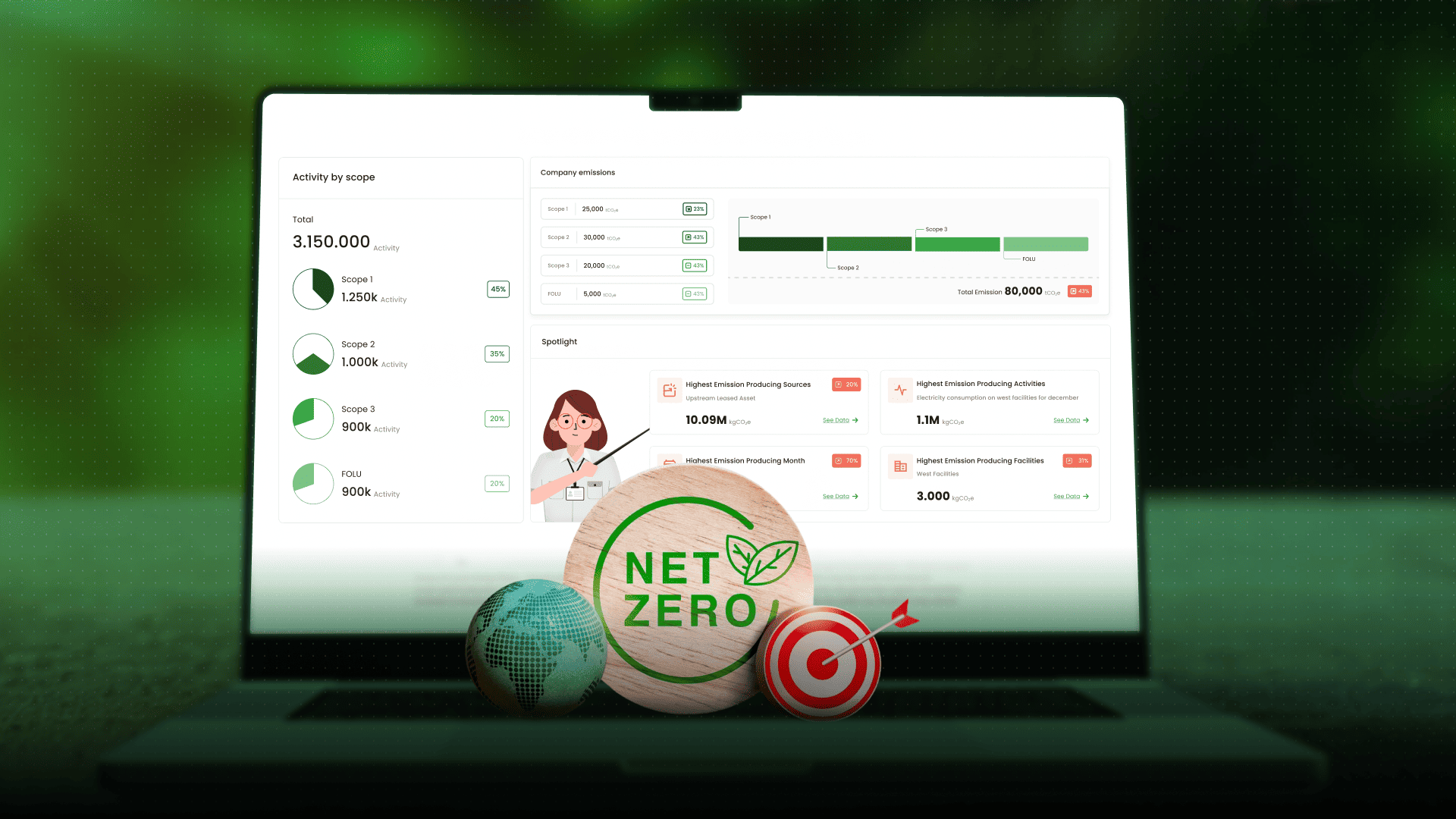
CarbonIQ by Jejakin is designed as an emissions management platform that helps companies calculate, monitor, and report carbon emissions systematically. The platform applies methodologies aligned with global standards such as the GHG Protocol and uses emission factor references from credible institutions including the IPCC.
A platform-based approach offers several key advantages.
First, activity data collection becomes more structured. Energy consumption, business travel, logistics, and operational data can all be consolidated within a single system.
Second, standardized emission factors improve consistency and help ensure that calculation results can be verified and compared accurately.
Third, greater reporting transparency. A digital system provides a clear methodological trail for every calculation, making audits more manageable.
Fourth, supporting companies in building a credible foundation toward achieving net-zero targets.
With the right system, companies are not only calculating emissions. They are also protecting their reputation from potential greenwashing accusations.
Sustainability commitments are not just about announcing net-zero targets. What matters most is ensuring that every reported emissions figure can be justified through transparent and credible methodologies.
Companies that are serious about climate action need to ensure that emissions calculations are consistent, transparent, and aligned with global standards.
Even small calculation errors can create major reputational consequences. On the other hand, credible carbon management systems can become the foundation of trust for investors, business partners, and the public.
If companies want to ensure that sustainability claims do not turn into greenwashing risks, the first step is making sure emissions data is calculated accurately.
Through technology-driven approaches and global methodologies like those implemented in CarbonIQ, companies can build climate strategies that are stronger, more transparent, and more trustworthy.
Inaccurate emissions calculations can transform sustainability commitments into serious business risks. Without clear methodologies, transparency, and standardized systems, net-zero claims may lead to accusations of greenwashing.
Companies need to ensure they have credible emissions management systems in place. With the right approach, businesses can not only reduce emissions but also strengthen long-term trust with investors, partners, and the public.


Jejakin’s green programs combine high-tech monitoring, biodiversity restoration, and community-led initiatives to deliver powerful, sustainable change across ecosystems.