Tech and Innovation
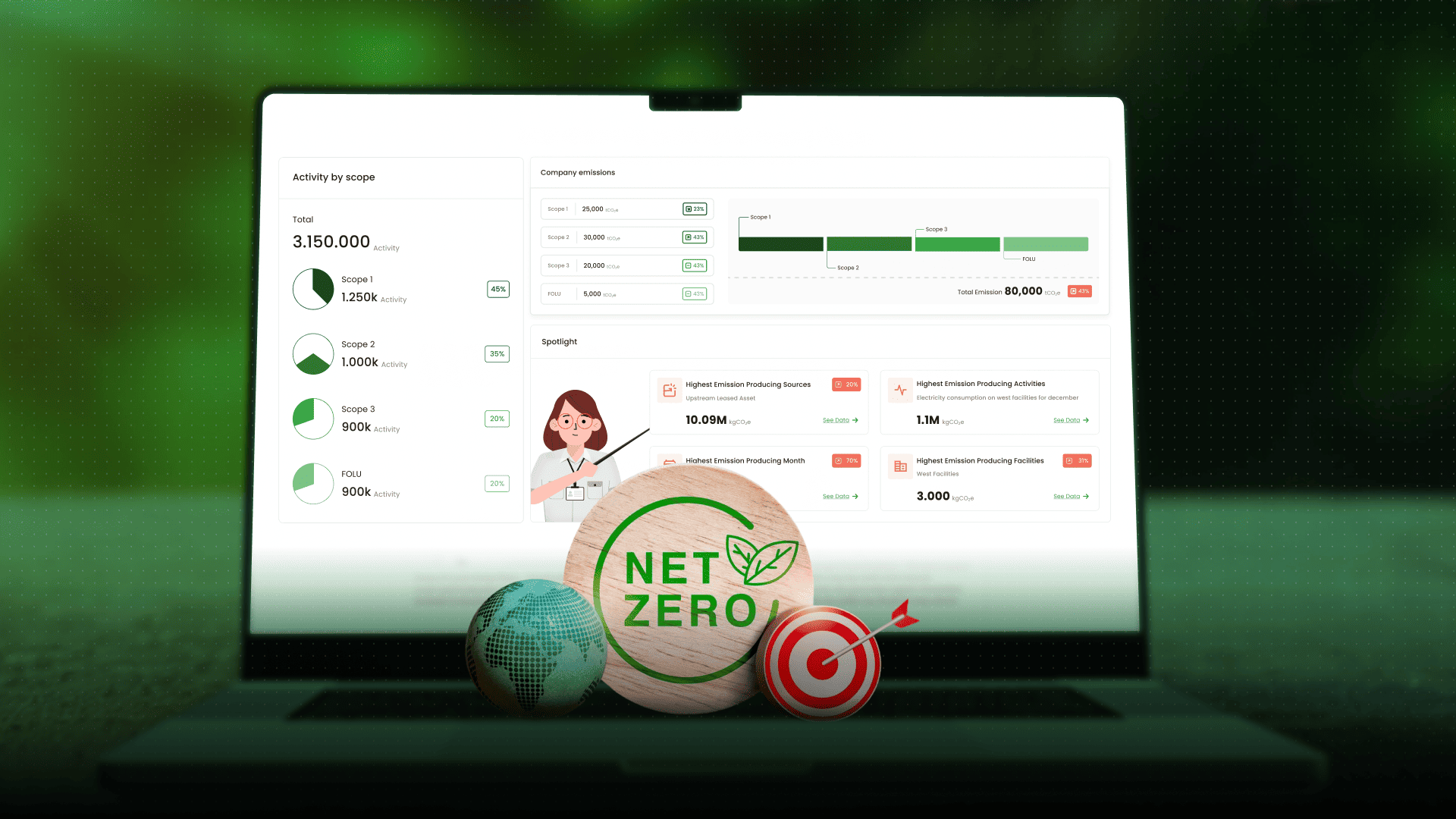
Climate change is pushing more companies to establish net zero emissions targets. However, one important question is often overlooked: are these targets being continuously monitored, or are they only calculated once a year?
Many organizations already have decarbonization roadmaps, including ambitious emission reduction targets over the next few years. Yet without a monitoring system that operates in real time, these targets often remain estimates built on assumptions.
This is where the real challenge begins. Targets that appear ambitious on paper do not always reflect the emissions actually occurring in daily operations.
According to the Greenhouse Gas Protocol, many organizations still calculate carbon emissions using annual inventory approaches based on aggregated historical data.
While this approach supports reporting requirements, it comes with several important limitations.
First, annual estimates often fail to capture emissions fluctuations throughout the year. Operational activities, energy consumption, and supply chain changes can significantly increase or decrease emissions within shorter periods.
Second, when data is only available at the end of the year, organizations lose the opportunity to intervene earlier. If emissions spike midyear, companies may only realize it once the reporting process has already been completed.
As a result, emission reduction targets often become projections based on models rather than reflections of actual operational conditions.
Many global companies have publicly committed to climate targets, including through initiatives such as the Science Based Targets initiative.
However, various studies show that there is still a significant gap between announced commitments and operational implementation.
One of the main causes is the lack of real-time emissions visibility. Without continuously updated data, sustainability teams often rely on manual reports from multiple business units.
This process is not only time consuming but also increases the risk of inconsistent data. In many cases, companies only discover that they are missing their targets after the reporting period has ended.
When this happens, mitigation strategies that could have been implemented earlier become delayed.
The IPCC Sixth Assessment Report highlights that global emissions reduction requires measurement systems that are accurate, transparent, and continuous.
For organizations, this means shifting from periodic reporting approaches toward continuous monitoring systems.
With continuous monitoring, companies can observe emissions dynamics almost in real time. Every operational change can immediately be reflected in emissions data.
The benefits are significant.
Sustainability teams can detect emissions spikes earlier, evaluate the effectiveness of decarbonization initiatives, and adjust strategies based on actual data.
This approach also helps organizations strengthen ESG reporting transparency because the data comes from systems that are constantly updated.

The transition toward continuous emissions monitoring requires systems capable of integrating multiple operational data sources.
This is where platforms like CarbonIQ by Jejakin become highly relevant.
CarbonIQ is designed as a decision support system that helps organizations monitor carbon emissions using continuously updated activity data. The platform integrates operational data, emissions factors, and calculation methodologies aligned with international standards.
With a data-driven approach, companies do not only see total emissions at the end of the year. They can also understand how emissions change over time and identify which operational activities contribute most to their carbon footprint.
This insight enables faster and more precise decision making for decarbonization strategies.
Net zero targets are not simply public commitments. They represent operational transformation journeys that require accurate data.
Without continuous monitoring, companies risk making decisions based on assumptions. Meanwhile, with real-time and data-driven monitoring systems, organizations can ensure that every decarbonization effort delivers measurable impact.
For companies aiming to achieve credible climate targets, the next step is not only setting goals but also building emissions monitoring systems that are transparent, measurable, and continuously updated.
Through data-driven approaches like CarbonIQ, the journey toward net zero can evolve from estimation into a strategy that is truly executable.
As ESG transparency expectations and global climate commitments continue to grow, companies can no longer rely solely on net zero statements written on paper. Organizations also need to ensure that every emissions reduction effort is continuously monitored using accurate and reliable data.
Real-time emissions monitoring enables companies to move faster, make more informed decisions, and strengthen credibility throughout their decarbonization journey.
With technology solutions like CarbonIQ, organizations can shift from annual estimation approaches toward emissions management systems that are more transparent, measurable, and prepared to support long-term climate action.
Want to ensure your net zero targets are more than annual assumptions?
Discover how CarbonIQ helps organizations monitor emissions in real time to support more accurate and measurable decarbonization strategies.


Jejakin’s green programs combine high-tech monitoring, biodiversity restoration, and community-led initiatives to deliver powerful, sustainable change across ecosystems.