Tech and Innovation
%C2%A0Menggunakan%C2%A0Data%C2%A0CarbonIQ.png)
Companies around the world are facing the same pressure: to reduce carbon emissions in a real and measurable way. According to the Intergovernmental Panel on Climate Change (IPCC), global emissions must decrease by around 43 percent by 2030 to keep global warming below 1.5°C. This target is not just a communication commitment it requires a strong, data-driven strategy.
This is where the Science Based Target (SBT) approach becomes essential. It ensures that a company’s emission reduction strategy aligns with pathways recommended by the global scientific community.
However, building an SBT is not simply about setting reduction targets. Companies need accurate emissions data, consistent analysis, and transparent progress tracking. Platforms like CarbonIQ help organizations manage this entire process in an integrated way from data collection to target monitoring.
According to the Science Based Targets initiative (SBTi), the baseline year is the foundation of any decarbonization target. It serves as the reference point for measuring all future emission reduction efforts.
A credible baseline year typically has several key characteristics:
Mistakes in defining the baseline year can significantly impact the entire decarbonization strategy. If the data is incomplete or calculation methods change drastically over time, previously set targets may become invalid.

Through CarbonIQ, companies can consolidate activity data from various sources, such as electricity consumption, fuel usage, and supply chain activities. This data is then converted into CO2e emissions using appropriate emission factors.
With consistent data recording, companies can ensure that the baseline year accurately represents their actual emissions profile.
IPCC reports show that to limit global temperature rise to around 1.5°C, global emissions must be reduced by nearly half before 2030.
This principle forms the basis of the science-based target approach. Emission reduction targets are not set arbitrarily—they follow scientifically derived global decarbonization pathways.
Companies typically use several methods to calculate their reduction pathway, such as:
With the help of CarbonIQ, baseline emissions data can be analyzed to project emission reduction pathways toward target years such as 2030 or 2040.
This data-driven approach helps companies understand how much emissions must be reduced annually to remain aligned with a 1.5°C pathway.
Many companies already have sustainability commitments, but not all realize how far their current emissions are from their targets.
Gap analysis is a critical step in understanding the distance between current emissions and desired targets.
This analysis typically includes:
CarbonIQ simplifies this process by providing structured emissions data visualization. Sustainability teams can easily identify emission contributions across operational activities.
With a clear understanding of existing gaps, companies can prioritize actions that deliver the greatest emission reduction impact.
Effective decarbonization strategies depend not only on long-term planning but also on the ability to respond quickly to changes.
A real-time data-driven approach enables companies to make more informed decisions in managing carbon emissions.
For example, organizations can identify reduction opportunities such as:
With integrated data collection in CarbonIQ, companies can monitor emission changes continuously. This allows sustainability teams to evaluate whether implemented strategies are delivering real impact.
A data-driven approach also helps organizations avoid decisions based on assumptions.
Transparency is a key element in implementing science-based targets. Investors, regulators, and stakeholders increasingly demand clear evidence of decarbonization progress.
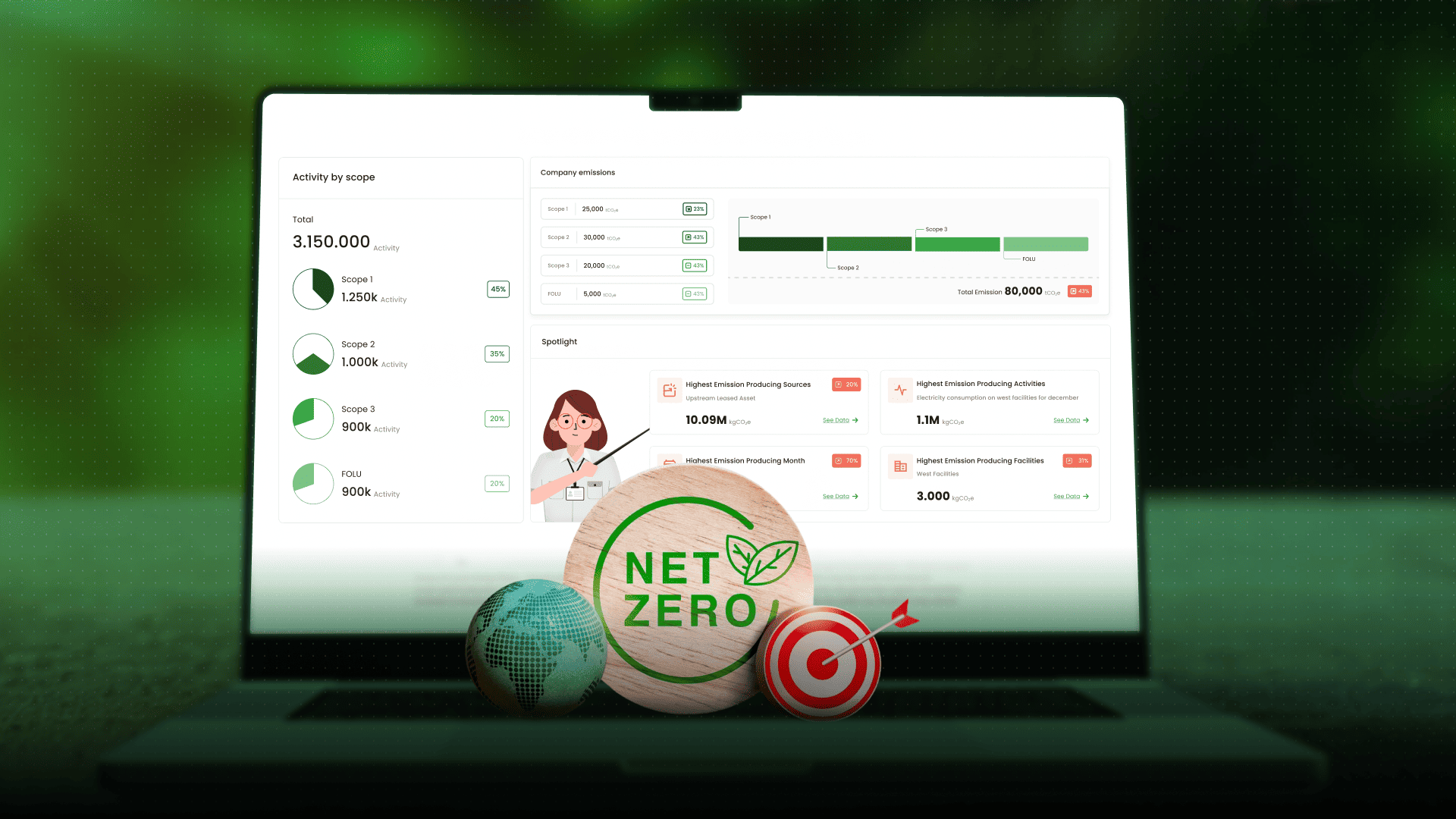
The CarbonIQ dashboard enables companies to track emissions performance visually and intuitively.
Key dashboard functionalities include:
With consistent monitoring systems, companies can ensure their decarbonization strategy remains on track.
Additionally, well-documented data simplifies reporting to international standards such as CDP and SBTi.
Building a science-based target is not just about setting emission reduction numbers. It requires accurate data, consistent methodologies, and continuous progress monitoring.
Through a data-driven approach like CarbonIQ, companies can establish a credible baseline year, calculate reduction pathways aligned with the 1.5°C target, and track decarbonization progress transparently.
When climate strategies are backed by strong data, companies not only meet sustainability commitments but also build a more resilient business foundation in the transition to a low-carbon economy.
If your organization is developing a decarbonization strategy, starting with an integrated emissions data management system is a crucial step to ensure every decision is based on accurate insights. Contact us for more information.


Jejakin’s green programs combine high-tech monitoring, biodiversity restoration, and community-led initiatives to deliver powerful, sustainable change across ecosystems.