Tech and Innovation

According to the Edelman Trust Barometer 2023, more than 60 percent of global consumers buy or boycott brands based on their stance on social and environmental issues. This fact shows one important thing: climate action is no longer a side activity, but part of market expectations.
Embedded climate action is an approach in which climate action is integrated directly into the product, system, or user journey, rather than standing as a separate program. This means every transaction, every interaction, and every process within a B2C platform can carry a component that contributes to emission reduction or sequestration.
Instead of creating a dedicated donation page or a seasonal campaign, embedded climate action works behind the scenes. It is built into the system, automatic, measurable, and becomes part of the platform's own digital architecture.
Many companies start their sustainability journey through a campaign-based approach. For example, a tree planting program on Earth Day, or carbon donations during certain moments. This model is good for building awareness, but is often inconsistent.
The campaign-based approach has several limitations:
In contrast, system-based sustainability places climate action as part of the operational system. Every purchase can include a carbon contribution. Every user can see its impact in real time. This process runs automatically through technology, not manually.
The fundamental difference lies in the structure. A campaign is an activity. A system is infrastructure.
According to the World Bank, pressure on the private sector to contribute to global climate targets is increasing in line with the net zero commitments of various countries. In this context, conventional CSR faces a challenge of scale.
Traditional CSR usually takes the form of separate projects, managed by a dedicated team, with a limited budget. When a company grows, the CSR program does not necessarily grow proportionally alongside it.
The main problem lies in three things:
Embedded climate action answers this challenge by making environmental contributions follow business growth. The more transactions, the greater the impact. This is what makes it scalable.
A report from the United Nations Environment Programme notes that transparency and accountability are the main focus in corporate climate action. Consumers are no longer satisfied with green claims that lack data.
On the other hand, regulations related to ESG reporting are increasingly developing in various countries. Standards such as Scope 1, 2, and 3 emissions reporting push companies to have a tidy and well-documented recording system.
B2C platforms are in a strategic position because they have direct access to millions of users. This means they are not only business players, but also channels for educating and distributing climate action.
When expectations rise, the solution needed is not merely communication, but systemic integration.
The Role of Technology, from API to Automation
Embedded climate action cannot run without technology. This is where the role of APIs, carbon marketplaces, and automation becomes crucial.
With API integration, a B2C platform can:
Through automation, this process runs without manual intervention. From the user's side, the experience remains simple. From the system's side, environmental impact is recorded and documented.
This model is often called the climate infrastructure layer, an additional layer built into the digital system without disrupting the main user experience.
ESG pressure is increasing. Investors consider environmental factors in their funding decisions. Consumers demand transparency. Regulations are developing. All of these factors create momentum.
In addition, the era of digital transparency makes information easy to access and verify. Platforms without a clear sustainability strategy risk losing trust.
Conversely, platforms that integrate climate action early have the opportunity to become leaders in their industry. They sell not only products or services, but also value.
This momentum is not a passing trend. It is a shift in market structure.
Several platforms in Indonesia are beginning to move toward the embedded climate action model.
In a ride-hailing ecosystem such as Gojek through the TreeCollective initiative, users can contribute to tree planting through in-app activities. This contribution is directly connected to the existing digital ecosystem.
In the digital investment sector such as Treasury Green Gold, integrating an environmental contribution feature can add value for users who want to invest while also contributing to climate issues.
In the energy sector such as PLN Electree, the digitization of services opens up the opportunity to add features for tracking or compensating emissions based on electricity consumption.
These three scenarios show the same pattern: climate action does not stand alone, but is attached to the main product.
If sustainability has so far been viewed as a department, now is the time to see it as infrastructure. It should be built into the system, not stuck onto the surface.
Embedded climate action allows a B2C platform to:
When climate action becomes part of the product architecture, it no longer depends on seasonal campaigns. It grows together with the business.
The question now is, does your platform want to merely appear to care, or to truly become part of the solution?
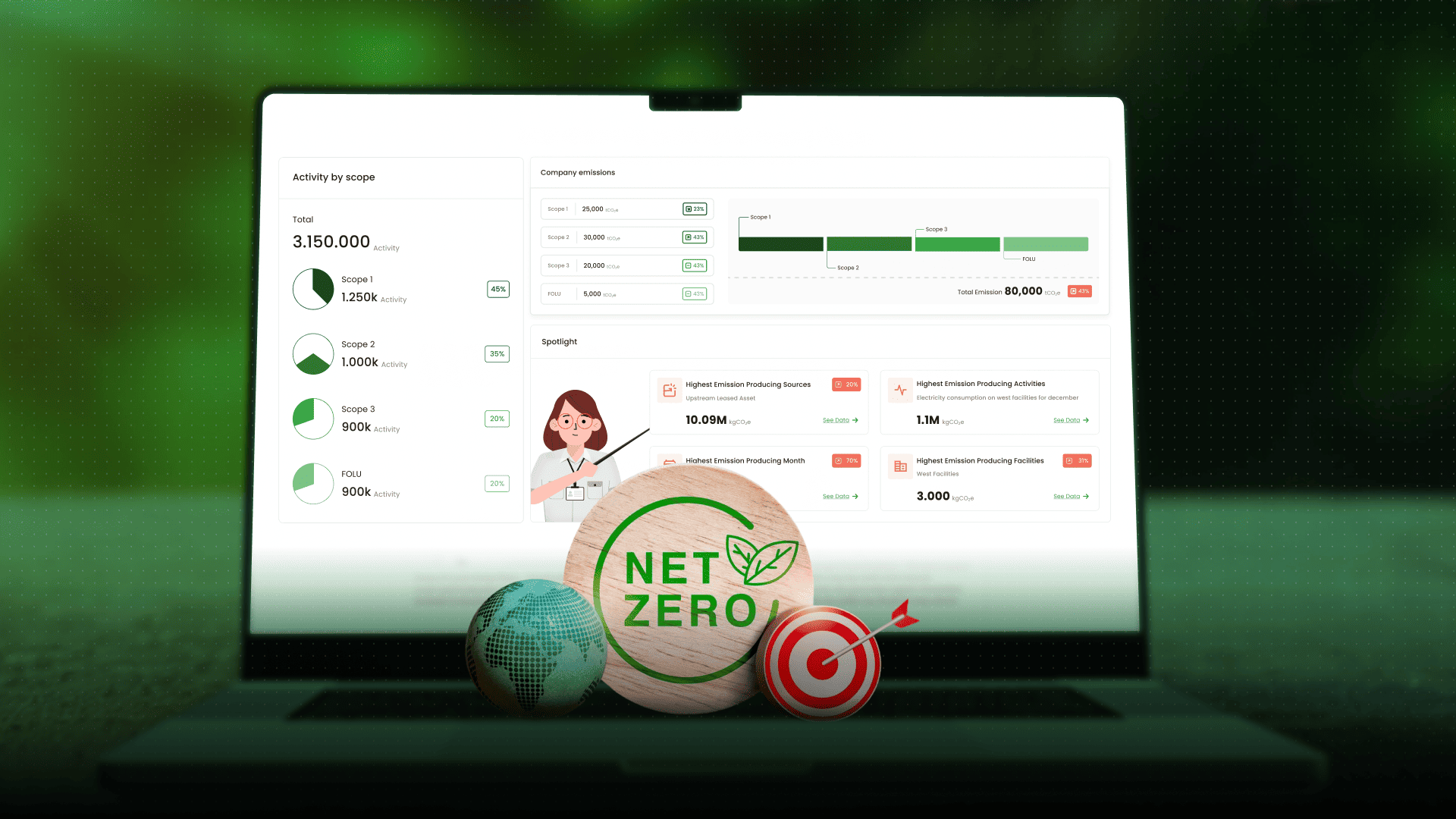
Jejakin provides an embedded climate action solution that can be integrated directly into a B2C platform through a system that is measurable, transparent, and scalable. We help calculate emissions, connect to verified climate projects, and provide an impact dashboard that can be displayed to users.
There is no need to build a system from scratch. There is no need for a massive architectural overhaul. We are here as a climate infrastructure layer ready to be integrated.
If you want to make sustainability part of your core product, not just a campaign, now is the time.
Contact Jejakin today and make your B2C platform part of a real and measurable climate action movement.


Jejakin’s green programs combine high-tech monitoring, biodiversity restoration, and community-led initiatives to deliver powerful, sustainable change across ecosystems.