Tech and Innovation

Meta description: Investors are becoming more critical of ESG reports. Without transparent and auditable data, companies face growing risks of declining trust and lower valuations.
Climate change, new regulations, and market pressure are pushing investors to become more selective in evaluating corporate sustainability commitments. ESG reports that once relied heavily on narratives and broad commitments are no longer enough. Global investors now expect transparent, granular, and auditable data as part of their assessment of business risks and opportunities.
This shift is becoming increasingly visible in fundraising and initial public offering (IPO) processes. ESG is no longer just an additional section in annual reports, but a critical factor in investment due diligence.
According to the Principles for Responsible Investment (PRI), more than 80 percent of institutional investors now incorporate ESG factors into their investment decision-making processes. This highlights a major shift in how investors evaluate companies.
ESG is no longer viewed solely as a reputational matter. It has become an important part of financial risk analysis and long-term business resilience. During the due diligence process, investors now assess indicators such as:
When companies present commitments without strong supporting data, investors may view them as potential risks. As a result, ESG data quality is becoming increasingly important for attracting funding.
A study by the World Economic Forum shows that investors are increasingly using ESG performance as an indicator of a company’s long-term stability. In fundraising and IPO processes, ESG analysis is now a key component of business evaluation.
Investors commonly conduct in-depth assessments of several ESG aspects, including:
Companies that can provide clear and verified ESG data tend to have stronger opportunities to attract investors.
On the other hand, ESG reports that remain broad and unsupported by data can raise concerns. Investors may see this as a sign that the company lacks a mature sustainability management system.
According to the GHG Protocol, transparency and consistency are key principles in corporate carbon emissions reporting.
This means ESG reports can no longer rely solely on aggregated numbers or rough estimates. Investors increasingly expect detailed and traceable information, including:
Granular data allows investors to understand how ESG figures are calculated and how accurate they are.
In addition, the ability to audit ESG data is becoming increasingly important. Without clear documentation, sustainability reports become difficult for auditors and third parties to verify.
According to the World Bank, transparent environmental information can improve investor confidence and reduce uncertainty in risk assessment.
In contrast, poor ESG transparency can create several business risks, including:
In many cases, investors prefer companies with transparent ESG data over companies that only provide sustainability narratives without strong evidence.
Transparent data also helps companies build long-term credibility with investors, regulators, and the public.

One of the biggest challenges in ESG reporting is often not the company’s intention, but the complexity of managing sustainability data. Emissions, energy, and operational activity data are often spread across different systems and departments.
Without an integrated system, companies may face issues such as:
This is why companies increasingly need a single source of truth for sustainability data.
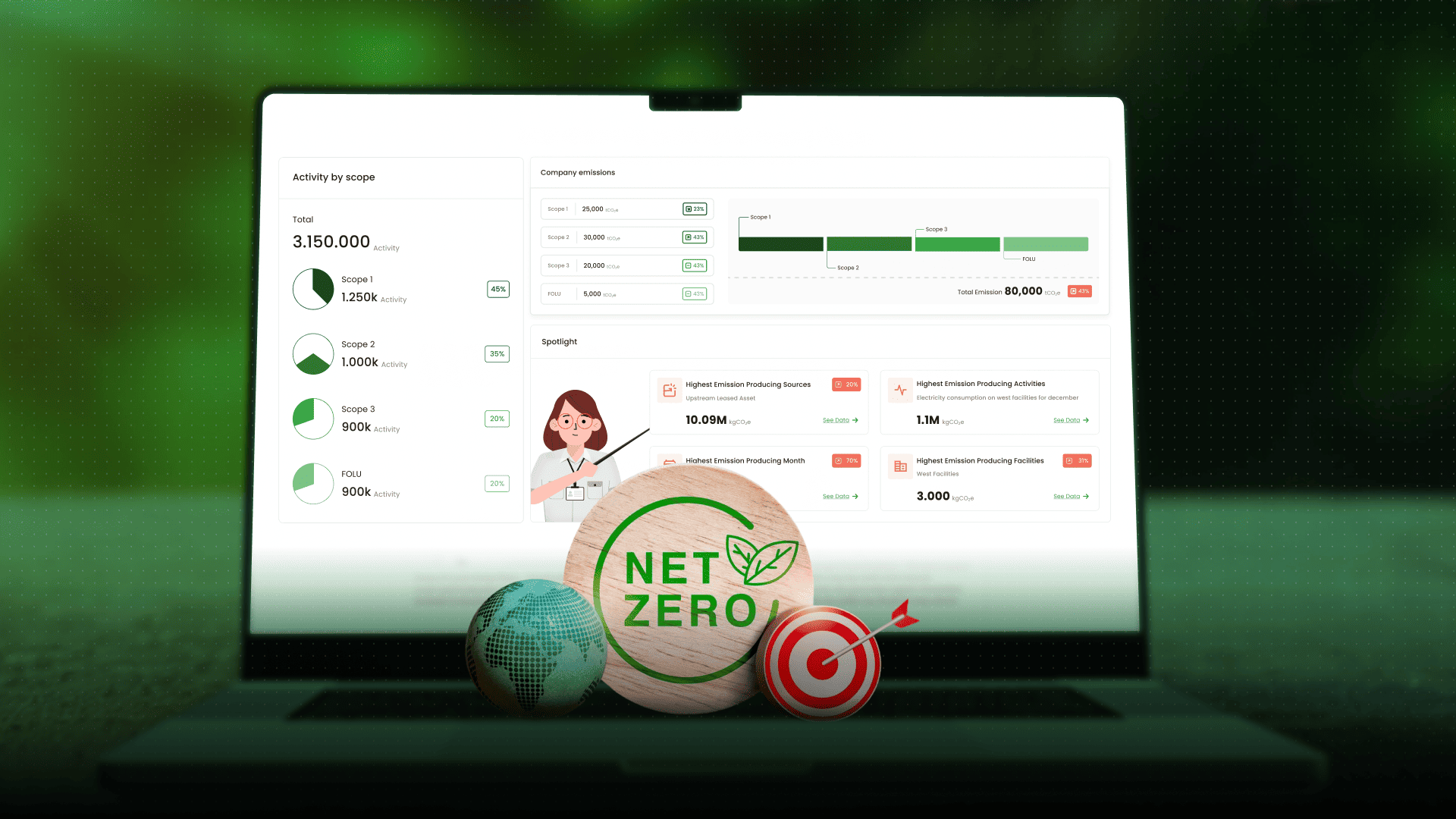
CarbonIQ by Jejakin helps companies manage carbon data in a centralized, structured, and verifiable way. With this system, companies can:
This data-driven approach helps companies build the level of transparency that global investors increasingly expect.
Global investors are becoming more selective in evaluating corporate sustainability commitments. ESG reports without transparent and auditable data are becoming increasingly difficult for the market to accept.
Companies that can provide accurate, granular, and verified ESG data will be in a stronger position to attract investment and maintain business valuation.
With the right data management system, companies can go beyond ESG compliance and build a more credible sustainability foundation.
If your company wants to ensure carbon data is transparent and ready for audits or investment processes, CarbonIQ by Jejakin can be the first step toward more trustworthy ESG reporting.


Jejakin’s green programs combine high-tech monitoring, biodiversity restoration, and community-led initiatives to deliver powerful, sustainable change across ecosystems.